
Table of Contents
- Introduction
- Key Takeaways
- How Your Car Air Conditioning System Works
- Why Your Car Air Conditioner Isn’t Cooling
- Top 10 Signs Your Car AC Needs Repairs
- Common Air Conditioning Repairs
- Diagnostic Process at CBD Auto
- Preventive Maintenance Tips
- When Should You Visit a Professional?
- Why Choose CBD Auto?
- Final Thoughts
- Frequently Asked Questions
Key Takeaways
|
Introduction
There are few things more frustrating than switching on your vehicle’s air conditioning during a hot Brisbane afternoon—only to feel warm or barely cool air coming from the vents.
Your vehicle’s air conditioning system is designed to keep you comfortable, improve visibility by reducing cabin humidity, and maintain a pleasant driving environment throughout Queensland’s warm climate. However, like any mechanical system, it requires routine maintenance and occasional repairs to perform at its best.
Many drivers assume that warm air simply means the refrigerant needs topping up. While low refrigerant is one of the most common causes, it is far from the only one. Compressors, condensers, cooling fans, electrical components, expansion valves, cabin filters, and even engine cooling issues can all affect AC performance.
Understanding why your air conditioner has stopped cooling can help you recognise early warning signs, avoid costly breakdowns, and restore reliable cabin comfort.
In this comprehensive guide, we’ll explain how automotive air conditioning systems work, the most common reasons they fail, typical repair solutions, and how regular maintenance can prevent expensive repairs.
How Does a Car Air Conditioning System Work?
Before understanding why an air conditioning system stops cooling, it helps to understand how it operates.
A modern automotive air conditioning system consists of several major components working together:
- Compressor
- Condenser
- Refrigerant
- Receiver/Drier or Accumulator
- Expansion Valve or Orifice Tube
- Evaporator
- Cabin Blower Motor
- Cooling Fans
- Pressure Sensors
- Climate Control Electronics
The compressor pressurises refrigerant, which circulates through the condenser where heat is released. The cooled refrigerant then travels through the expansion valve before entering the evaporator, where it absorbs heat from the cabin air. Finally, cool air is blown through the vehicle’s vents.
If any component fails or becomes inefficient, cooling performance quickly decreases.
Why Is Your Car Air Conditioning Not Cooling?
Several issues can cause poor air conditioning performance.
1. Low Refrigerant Levels
The most common cause is insufficient refrigerant.
Unlike engine oil, refrigerant should not naturally “run out.” If levels are low, there is usually a leak somewhere within the system.
Common leak locations include:
- O-rings
- Flexible hoses
- Condenser
- Compressor seals
- Evaporator core
Low refrigerant reduces cooling efficiency and can eventually damage the compressor.
2. Refrigerant Leaks
Small leaks often develop gradually and may go unnoticed for months.
Warning signs include:
- Cooling performance decreases slowly
- AC works intermittently
- Hissing noises
- Oily residue around AC components
Professional leak detection equipment is required to accurately locate the source.
3. Faulty AC Compressor
The compressor is the heart of the air conditioning system.
If it fails, refrigerant cannot circulate properly.
Symptoms include:
- Warm air only
- Loud clicking noises
- Compressor clutch not engaging
- Metal particles in the refrigerant system
Compressor replacement is one of the more significant AC repairs, making early diagnosis particularly important.
4. Blocked or Damaged Condenser
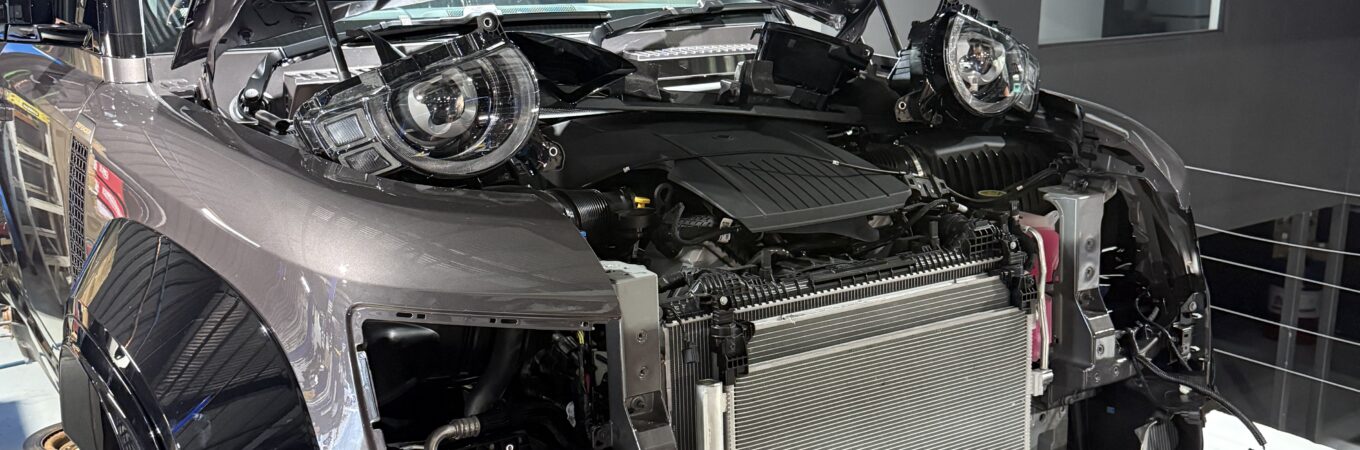
Located behind the front grille, the condenser removes heat from the refrigerant.
It may become blocked by:
- Dirt
- Leaves
- Insects
- Road debris
Physical damage from stones or minor collisions can also reduce efficiency.
Poor airflow prevents proper cooling.
5. Electrical Problems
Modern air conditioning systems rely heavily on electronics.
Faults may involve:
- Blown fuses
- Faulty relays
- Pressure switches
- Temperature sensors
- Wiring issues
- Climate control modules
Professional diagnostic scanning is often necessary to identify electrical faults accurately.
6. Cooling Fan Failure
The condenser depends on cooling fans for airflow, particularly while stationary.
If fans stop working:
- Air conditioning cools while driving
- Cooling disappears in traffic
- Engine temperature may also rise
Fan motors, relays, and control modules are common failure points.
7. Clogged Cabin Air Filter
A dirty cabin filter restricts airflow.
Common symptoms include:
- Weak airflow
- Reduced cooling
- Dust entering the cabin
- Musty odours
Fortunately, replacing the cabin filter is relatively inexpensive.
8. Expansion Valve Problems
The expansion valve controls refrigerant flow.
If blocked or malfunctioning, the system cannot regulate pressure correctly.
This often results in inconsistent cooling.
9. Evaporator Issues
Hidden behind the dashboard, the evaporator absorbs heat from the cabin.
Problems include:
- Internal leaks
- Ice formation
- Mould growth
- Blockages
Repairs may require substantial dashboard disassembly.
10. Climate Control Sensor Faults
Luxury and modern vehicles use multiple sensors to regulate temperature automatically.
Faulty sensors may incorrectly signal the system, preventing effective cooling.
Top 10 Signs Your Car Air Conditioning Needs Repairs
- Warm air blowing from vents
- Weak airflow
- Unpleasant smells from vents
- Strange clicking or grinding noises
- Water leaking inside the cabin
- Air conditioner cycles on and off frequently
- Compressor doesn’t engage
- Dashboard AC warning light
- Cooling works only while driving
- Windows fog up more easily than normal
Recognising these warning signs early can prevent more extensive system damage.
Common Car Air Conditioning Repairs
Depending on the diagnosis, repairs may include:
- Refrigerant leak detection
- Refrigerant recovery and recharge
- Compressor replacement
- Condenser replacement
- Cabin air filter replacement
- Cooling fan repairs
- Pressure switch replacement
- Expansion valve replacement
- Hose replacement
- Electrical diagnostics
- Climate control calibration
- System performance testing
Every repair should include pressure testing and performance verification to ensure the system operates correctly.
Common Car Air Conditioning Problems and Repair Solutions
| Problem | Typical Symptoms | Common Repair |
| Low Refrigerant | Warm air, weak cooling | Leak detection and refrigerant recharge |
| Refrigerant Leak | Cooling gradually decreases | Repair leak and recharge system |
| Compressor Failure | No cooling, unusual noises | Compressor replacement |
| Blocked Condenser | Poor cooling, overheating | Condenser cleaning or replacement |
| Cooling Fan Failure | AC warm in traffic | Fan motor or relay replacement |
| Dirty Cabin Filter | Weak airflow | Cabin filter replacement |
| Electrical Fault | AC not activating | Electrical diagnostics and repair |
| Expansion Valve Failure | Inconsistent cooling | Valve replacement |
| Evaporator Leak | Poor cooling, odour | Evaporator repair or replacement |
| Climate Sensor Fault | Incorrect cabin temperature | Sensor replacement and system calibration |
Why Professional Diagnosis Matters
Modern automotive air conditioning systems are far more advanced than they were a decade ago.
Professional workshops use specialised equipment to:
- Recover refrigerant safely
- Measure operating pressures
- Detect refrigerant leaks
- Inspect compressor performance
- Scan electronic control modules
- Verify cooling efficiency
- Prevent refrigerant contamination
Attempting DIY repairs without the correct equipment can damage components, reduce system efficiency, and may also violate environmental regulations regarding refrigerant handling.
Preventive Maintenance Tips
Routine maintenance is the most effective way to avoid unexpected AC failures.
Recommended practices include:
- Run the air conditioner for at least 10 minutes every week, even during winter.
- Replace the cabin air filter according to the manufacturer’s maintenance schedule.
- Keep the condenser free of leaves, dirt, and debris.
- Have refrigerant levels and system pressures checked during routine servicing.
- Address unusual noises, odours, or reduced cooling promptly.
- Ensure the engine cooling system is functioning correctly, as overheating can affect AC performance.
These simple steps help maintain consistent cooling performance and reduce the likelihood of expensive repairs.
When Should You Visit a Professional?
Schedule an inspection if:
- The AC no longer blows cold air.
- Cooling performance has noticeably declined.
- You hear unusual noises when the AC is operating.
- There are unpleasant smells coming from the vents.
- The compressor repeatedly cycles on and off.
- The vehicle has been involved in a front-end collision that may have damaged the condenser.
- It has been several years since the air conditioning system was last inspected.
Prompt attention often prevents minor issues from developing into major component failures.
Why Choose CBD Auto?
Located at 50 Caswell St, East Brisbane QLD 4169, CBD Auto provides professional automotive servicing and repair solutions, including expert air conditioning diagnostics and repairs for a wide range of vehicles.
Our experienced technicians use advanced diagnostic equipment to accurately identify faults and recommend repairs based on the manufacturer’s specifications—not guesswork.
When you choose CBD Auto, you benefit from:
- Qualified and experienced technicians
- Comprehensive air conditioning diagnostics
- Refrigerant leak detection
- Compressor and condenser repairs
- Genuine or OEM-quality replacement parts
- Transparent repair recommendations
- Modern diagnostic equipment
- Honest, customer-focused service
Whether your vehicle requires a simple refrigerant recharge or a complete climate control system repair, our team is committed to restoring reliable cooling performance.
If your vehicle also requires broader car repair in East Brisbane, our workshop provides comprehensive mechanical services to keep your car safe, reliable, and road-ready. As specialists in auto air conditioning repairs Brisbane, we focus on delivering accurate diagnostics, quality workmanship, and long-term repair solutions.
Final Thoughts
A vehicle’s air conditioning system does much more than keep the cabin cool—it improves driving comfort, reduces humidity, enhances visibility, and contributes to a more enjoyable driving experience, especially in Brisbane’s warm climate.
Warm air, weak airflow, unusual noises, or unpleasant odours should never be ignored. Early diagnosis and preventive maintenance can significantly reduce repair costs while extending the lifespan of key components such as the compressor, condenser, and evaporator.
By understanding the common causes of air conditioning problems and partnering with an experienced automotive workshop, you can keep your climate control system operating efficiently year-round.
At CBD Auto, we’re committed to helping drivers stay comfortable on every journey with professional diagnostics, expert repairs, and trusted automotive care tailored to Brisbane conditions.
Frequently Asked Questions (FAQs)
A. The most common causes include low refrigerant levels, refrigerant leaks, compressor failure, electrical faults, blocked condensers, or restricted airflow caused by a dirty cabin air filter.
A. While there is no universal interval, it's recommended to have the system inspected every 1–2 years or whenever you notice reduced cooling performance, unusual noises, or unpleasant odours.
A. Not always. Refrigerant should not normally be lost over time. If levels are low, there is typically an underlying leak that should be identified and repaired before recharging the system.
A. Yes, the vehicle can usually still be driven safely. However, reduced cabin cooling, poor demisting performance, and ignored AC faults may lead to more expensive repairs if left unresolved.
A. This often indicates insufficient airflow across the condenser, commonly caused by a faulty cooling fan, blocked condenser, or related electrical issue.
A. Yes. Routine inspections, replacing the cabin air filter, checking refrigerant levels, cleaning the condenser, and addressing minor issues early can improve efficiency, reduce wear, and help avoid costly component failures.
